
Reviewed · ARUBA HORSEBACK RIDING
Aruba’s Northern Coast Horseback Adventure
Aruba by horse feels like the island is showing off just for you. I especially love the small-group setup and how the guides keep the ride moving, plus the calm, well-trained horses that make first-timers feel steady. You’ll get desert trail time, ocean views, and real stops with story.
One thing to plan around: there’s a strict weight limit, and hats aren’t allowed—so pack long pants and firm shoes, and skip the cap.
In This Review
- Key Things You’ll Notice on This Northern Coast Ride
- Aruba Horseback Rules of Thumb: What Makes This Ride Special
- Starting at Gold Mine Ranch: Quick Prep, Clear Instructions
- Matividiri: Desert Riding, Ocean Sightlines, and Bushiribana’s Gold Rush Stop
- What you’re doing here
- Stop moment: Bushiribana gold mill ruins
- A small practical drawback
- Wariruri Bay: Beach Gallops, White Sand Dunes, and a Baby Natural Bridge Moment
- The riding experience
- Photo help is part of the deal
- The natural bridge photo moment
- Guides and Horses: Why This Feels Safe and Fun
- What the guides actually do
- The “beginner-friendly without being boring” balance
- Price and Value: Is $100 Worth It?
- What to Wear and Bring (Because the Trail Has Opinions)
- When You Should Book: Morning Energy vs. Crowd Feel
- Should You Book This Aruba Northern Coast Horseback Adventure?
- FAQ
- How long is the Aruba Northern Coast Horseback Adventure?
- What time does the tour start?
- Where do I meet for the tour?
- Does the tour include hotel pickup?
- Is a helmet provided?
- What riding instructions are provided before I mount?
- What should I wear?
- What is the weight limit?
- What is included in the price?
Key Things You’ll Notice on This Northern Coast Ride
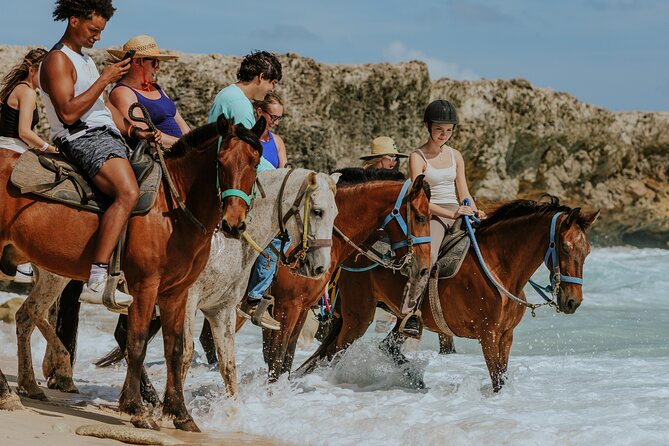
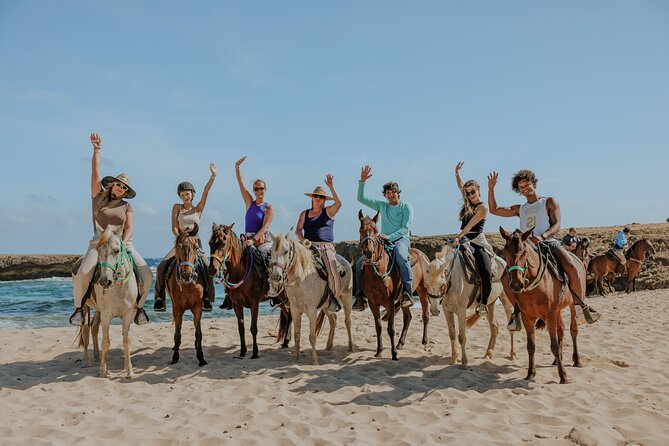
- A maximum of 10 riders so you get more hands-on attention
- Demo and safety instructions before mounting so you start confident
- Desert trail plus ocean views right from the ranch area
- Bushiribana gold mill ruins stop for Aruba’s gold-rush context
- Wariruri Bay beach riding with photo support at scenic moments
Back in the saddle for more rides around Aruba
- Horseback Ride Tour to Natural Pool in Arikok National Park★ 5.0 · 1,147 reviews
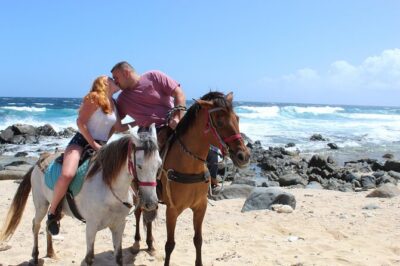
- Aruba Beach Ecological Horseback Ride★ 4.5 · 1,083 reviews
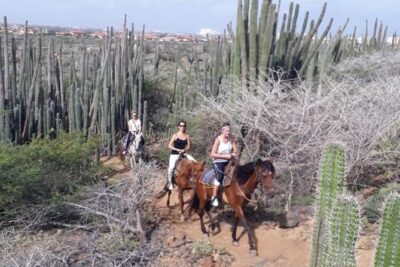
- Aruba Countryside: Horseback Adventure to Urirama Cove★ 4.5 · 249 reviews
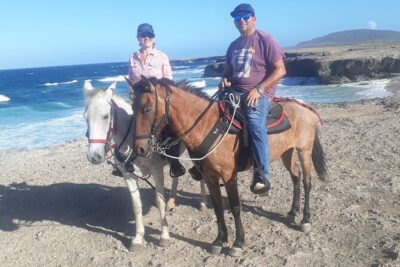
- 2-Hour Horseback Riding Tour to Little Natural Bridge in Aruba★ 5.0 · 210 reviews
Aruba Horseback Rules of Thumb: What Makes This Ride Special
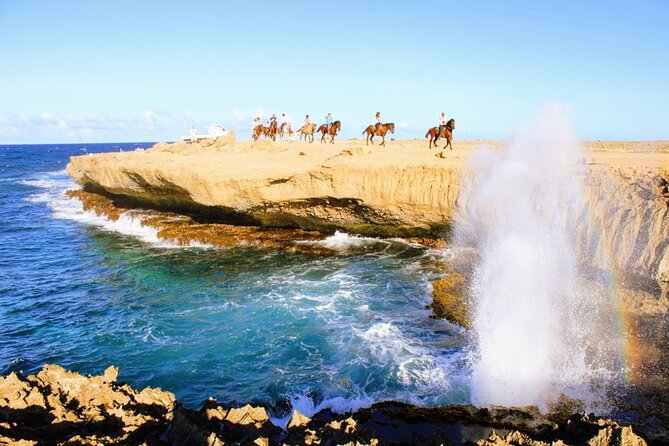
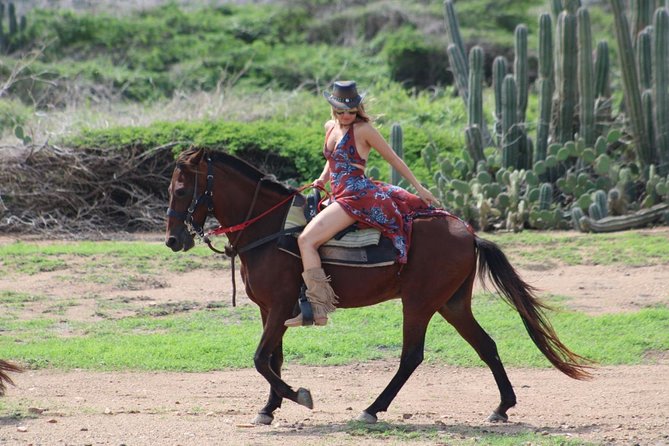
This isn’t a slow “walk in a circle” type of outing. It’s built for non-stop riding with only quick pauses for photos, so you spend your time on the trail rather than hanging around. The northern coast setting matters too: you get ocean visibility for stretches, then swing into desert-style terrain with cacti and sand dunes, then finish with a beach moment at Wariruri Bay.
The other big win is how the experience is paced for mixed riders. You’ll be walking, trotting, and cantering, and the guides adjust the flow so newer riders can handle it while others still get meaningful speed. Some people even mention short gallop stretches, which tells me the horses are responsive and the guides aren’t afraid to give you a real “this is why I’m here” riding experience.
My only “check yourself” note is that the experience is physical in small ways. You’ll need to sit in the saddle for about 1 hour 30 minutes to 1 hour 40 minutes, keep a steady seat while the horse moves, and manage uneven ground. If you’re expecting a cushy, fully seated carriage ride, this will feel different.
Starting at Gold Mine Ranch: Quick Prep, Clear Instructions
You meet at The Gold Mine Ranch Aruba in Matividiri (Matividiri 60, Paradera, Aruba). The published start time is 9:00 am, and you’ll be directed to arrive around 8:30 am because riding instructions kick off at 8:30 am.
That instruction piece is not a formality. Before anyone mounts, you’ll get guidance on safety and riding basics. In practice, this makes a huge difference if it’s your first time. Several people in their comments highlight that the horses required very little guidance from riders, which usually means the animals are trained for trail behavior and the guides run a tight system with commands.
You should also expect gear to be handled for you: tack is included, and helmets are available. Adults can choose helmets but they’re strongly recommended; helmets are mandatory for children. The tour also includes bottled water and an air-conditioned vehicle for the ride in between points.
Matividiri: Desert Riding, Ocean Sightlines, and Bushiribana’s Gold Rush Stop
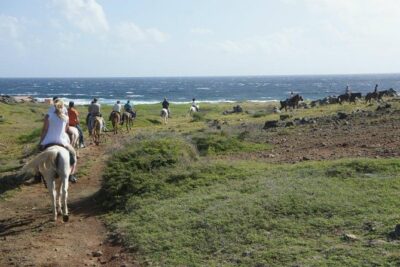
After the ranch area, your ride starts right along the northern coast. That means you’re not just looking at Aruba from a viewpoint—you’re moving through it, with ocean views stretching toward the beaches for parts of the trail.
What you’re doing here
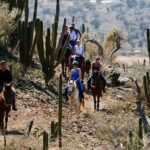
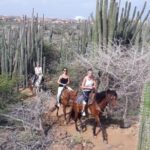
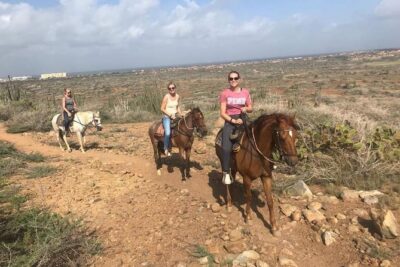
You’ll ride through desert terrain with cacti and sand dunes, and you’ll likely rotate between walking, trotting, and cantering depending on how your group is moving and how your horse responds. The pace is generally built for steady progress rather than long, drawn-out breaks.
There are also photo moments. People consistently mention pictures at the scenic stops, and at this stage of the trip those stops help break up the ride so you don’t feel like you’re only watching the horizon from one angle.
Stop moment: Bushiribana gold mill ruins
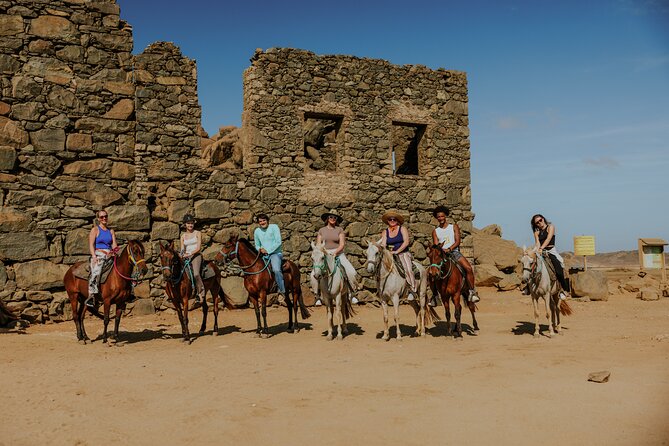
One of the most interesting segments is the pass-by stop connected to Aruba’s gold rush—specifically the Bushiribana gold mill ruins. You’ll see the abandoned mill structure while your guide connects it to mining activity from the gold rush era, when ore processed at the mill came from nearby hills.
Why that matters for you: it turns the ride from scenery-only into “I understand what I’m looking at.” Aruba has a lot of light-and-color postcard views, but this ruins stop brings in context and gives you something to remember beyond the photos.
A small practical drawback
This portion of the ride is outdoors on uneven ground. Plan for sun and heat, and wear clothing that doesn’t ride up. The tour asks for long pants and firm shoes, and it explicitly says no hats. If you’re used to wearing a cap for sun protection, bring alternatives like sunglasses and sunscreen instead.
Wariruri Bay: Beach Gallops, White Sand Dunes, and a Baby Natural Bridge Moment
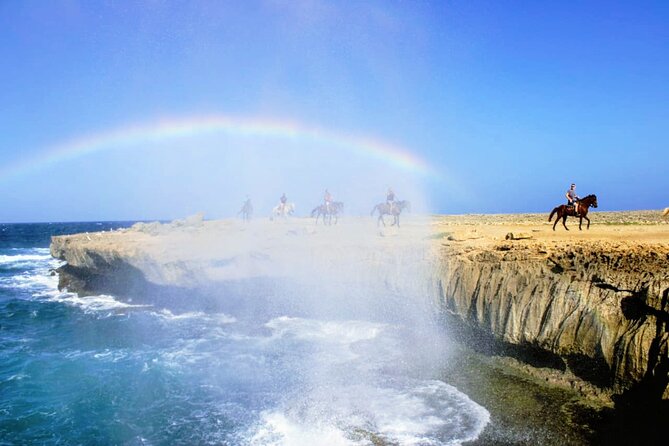
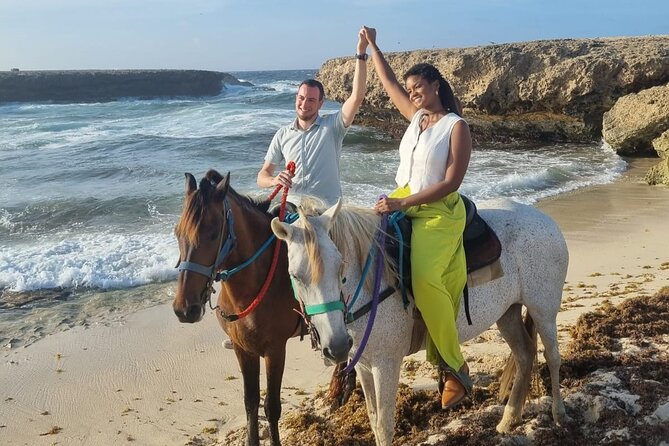
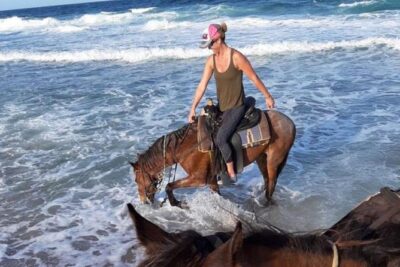
Wariruri Bay is the “ride your horse on the beach” highlight. This is where the terrain shifts to showier coastal scenery: white sand dunes, open beach space, and that classic Caribbean feel you came for.
The riding experience
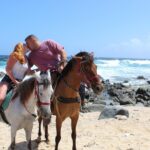
People talk about beach riding as a dream: galloping through sand dunes and posing with the coastline in the background. Your actual gait depends on your group and your horse, but you can expect at least some faster movement compared to the desert sections.
If you’re a first-timer, this part can be the most memorable because it feels different from trail riding. If you’ve ridden before, it still feels special because you get both ocean views and sand texture, not just flat ground.
Photo help is part of the deal
At Wariruri Bay, you get photo support. The plan includes a photographer and personal guide attention so you’re not just guessing where to pose. That’s why many people leave with pictures at multiple points along the way, not just a single “we stopped somewhere” shot.
The natural bridge photo moment
You’ll also have a stop connected to a baby natural bridge. This is another one of those stops that makes the ride feel like a route, not a random trail.
Even better, it gives you variety. Desert trail plus ruins context plus beach plus natural formations means you’re getting more than one kind of Aruba in a single outing.
Guides and Horses: Why This Feels Safe and Fun
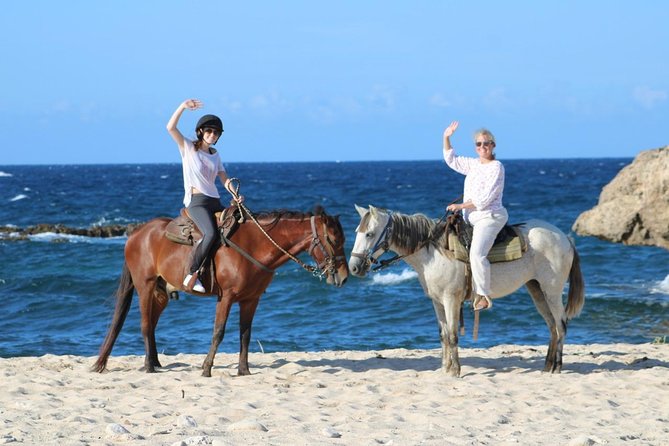
The best compliment about this experience is how often people connect the calm horses with feeling safe. Several riders mention that the horses were gentle, well taken care of, and behaved well even in tricky terrain with cacti and rocky spots. That’s not luck—that’s training and handling.
What the guides actually do
The guides share the island ecosystem and history while also watching riders in real time. People name guides like Jesus and Candy, and also mention staff members such as Jeanrick and Mr. C. You can think of that as good signs of a team that people remember, not just a one-and-done guide interaction.
You’ll often see more than one guide with the group. Some rides are run with two guides so attention stays high, especially when the group stretches out.
The “beginner-friendly without being boring” balance
A key detail from riders: horses respond to whistles and commands, so you’re not wrestling the animal for every step. That’s what allows the guides to offer a more authentic ride. People mention cantering stretches even when many riders are brand new, which usually means the horses are reliable and the guides can keep the group together.
If you’re nervous, this is reassuring. If you’re confident, it’s still exciting because you’re not stuck only walking.
Price and Value: Is $100 Worth It?
At $100 per person, this is a premium activity in Aruba terms, but it also comes with real value built in.
Here’s what you’re paying for that reduces your out-of-pocket hassle:
- Horse tack and gear are included
- Riding and safety instructions are part of the experience
- Bottled water is included
- Helmets are included (adult optional/recommended, child mandatory)
- An air-conditioned vehicle is included
- Small group size (max 10) means the guide attention likely stays personal
The value kicker is the hotel transfers from select areas. Several people note pickup as appreciated, and some specifically compare it to what it might cost to go on your own. If you’re staying near the pickup zone, you’re buying convenience as much as you’re buying the ride.
Time-wise, you’re out for roughly 1 hour 30 minutes to 1 hour 40 minutes. You’ll still have a full day in Aruba after this, and you’ll have something active and memorable rather than another beach pass.
What to Wear and Bring (Because the Trail Has Opinions)
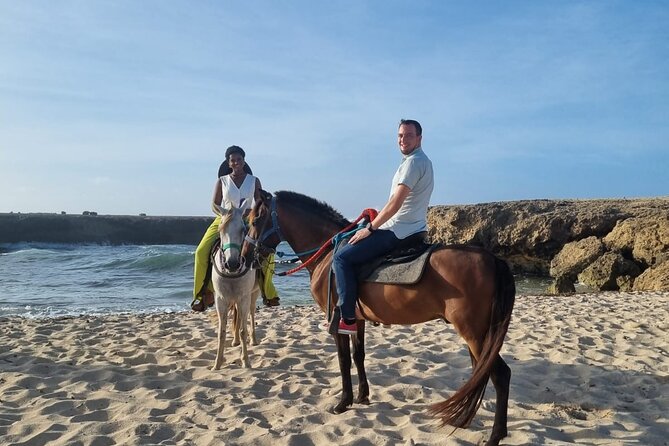
This tour has a few clear rules that make the ride easier and safer:
- Long pants strongly advised
- Firm shoes recommended (you’ll want grip)
- No hats allowed
- Bring sunscreen and sunglasses to handle the sun
- If you need an adult helmet, take it—especially if you burn easily
Also consider your comfort with sitting upright for the full ride. Saddles can be comfortable, and riders mention comfortable saddles, but your body still does the work.
If you’re over the weight limit, don’t try to “make it work.” The posted limit is 220 lbs per rider, and the instruction is direct: do not book if you’re over.
When You Should Book: Morning Energy vs. Crowd Feel
The ride starts in the morning, around 9:00 am. That timing is a smart move for two reasons: the coast and desert feel better in earlier light, and the trail is generally easier to enjoy when you don’t feel surrounded by other groups.
One rider specifically suggests choosing morning because it’s more peaceful. That lines up with your best instincts for comfort and photo quality.
One more booking reality: the tour requires good weather. Aruba can be changeable, and the experience may shift to a different date or offer a refund if it’s canceled for weather reasons.
Should You Book This Aruba Northern Coast Horseback Adventure?
Book it if you want:
- A real horseback experience with movement beyond walking
- Desert scenery, ocean views, and beach riding in one outing
- A route with context, including the Bushiribana gold mill ruins stop
- A small group ride where the guide can keep an eye on you
Skip it (or think twice) if:
- You’re right at the edge of the 220 lbs weight limit (the rule is strict)
- You rely on hats for sun protection (the ride doesn’t allow them)
- You want a purely relaxing sit-and-sightseeing tour with minimal physical riding demands
If you match the sweet spot, this is one of the best “see the island from the inside” activities on Aruba. The combination of reliable horses, hands-on guidance, and scenery that changes every segment makes it the kind of day you’ll remember long after the photos fade.
FAQ
How long is the Aruba Northern Coast Horseback Adventure?
It runs about 1 hour 30 minutes to 1 hour 40 minutes.
What time does the tour start?
Start time is 9:00 am.
Where do I meet for the tour?
You meet at The Gold Mine Ranch Aruba, Matividiri 60, Paradera, Aruba.
Does the tour include hotel pickup?
Hotel transfers from select areas are offered, and you’ll need to contact the operator with your hotel information to confirm pickup time.
Is a helmet provided?
Yes. Helmets are included. Helmets are mandatory for children, and optional but recommended for adults.
What riding instructions are provided before I mount?
Riding and safety instructions are required before anyone gets to mount a horse, and you arrive early for that instruction time.
What should I wear?
Long pants and firm shoes are strongly advised. No hats are allowed.
What is the weight limit?
The weight limit is 220 lbs per rider. Please do not book if you exceed it.
What is included in the price?
Included items are bottled water, horseback riding tack, helmets, riding and safety instructions, and an air-conditioned vehicle. Private transportation is not included.
More Tour Reviews in Aruba



More Coastal Horseback Rides
Not quite your thing? Keep scrolling for more to do around Aruba




Aruba Horseback Riding, compared.
 ★ 5.0Horseback Ride Tour to Natural Pool in Arikok National ParkFrom $1551,147 reviews
 ★ 4.5Aruba Beach Ecological Horseback RideFrom $951,083 reviews
 ★ 4.5Aruba Countryside: Horseback Adventure to Urirama CoveFrom $115249 reviews
 ★ 5.02-Hour Horseback Riding Tour to Little Natural Bridge in ArubaFrom $116210 reviews
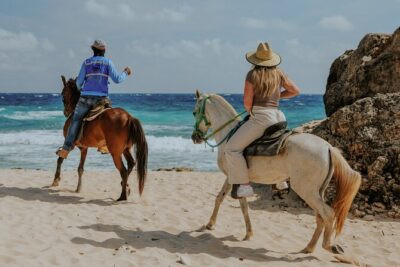 ★ 4.5Aruba North Coastline: Small-Group Horseback Riding TourFrom $100182 reviews
 ★ 5.0Aruba Horseback Riding Tour For Advanced RidersFrom $125122 reviews
 ★ 4.5Sunset Horseback Ride in ArubaFrom $130116 reviews
 ★ 4.5Aruba Horseback Riding Tour to Hidden LagoonFrom $10588 reviews
Browse the lists this tour appears in