

Reviewed · ORANJESTAD CITY TOURS
Aruba Downtown Historic and Cultural Walking Tour
A morning walk through Oranjestad tells a lot. This 2.5-hour Downtown Historic and Cultural Walking Tour strings together forts, museums, churches, and everyday streets so you understand Aruba beyond the beach.
I love how the tour mixes big-picture history with small details you can actually see: the old fort and clock tower at Fort Zoutman, plus the archaeology museum stop that brings Aruba’s first inhabitants to the front of the story. I also like that you get more than sightseeing by including two food tastings and insider tips on where to eat and drink downtown.
The main drawback is simple: you’re walking a lot, in heat, with lots of stop-and-go talking. If you prefer slower museum time, plan to do extra exploring on your own afterward.
In This Review
- Key Highlights You’ll Feel on This Walk
- Oranjestad at 9:00 a.m.: What This Small-Group Walk Is Built For
- Fort Zoutman Historical Museum and the Old Clock Tower View
- Wilhelmina Park: Statues, Iguanas, and a Quick Culture Reset
- National Archaeological Museum Aruba: Early Inhabitants, Up Close
- Two Included Tastings: Pan Bati and the Snacks That Make the Stories Stick
- Oranjestad Main Street and the Shops Since 1928
- Government Buildings, Arts and Crafts, and What Downtown Can Teach
- Aruba Parliament: Politics Without the Dry Stuff
- Protestant Church and Religion on the Island
- Breakfast-and-Party Food at Havenstraat, Plus Homes on Wilhelminastraat
- How the Tour Adds Up: Lots of Stops, Short Visits, Room for Your Own Time
- Price and Value: Is $45 Worth It in Real Terms?
- Guide Style Matters: From Wendel to Milton and Evy
- Who Should Book This Walking Tour (and Who Might Skip It)
- Should You Book This Oranjestad Historic Walk?
- FAQ
- How long is the Aruba Downtown Historic and Cultural Walking Tour?
- What is the price?
- What does the tour include besides the guide?
- Are museum entrance fees included?
- What are the tastings?
- Where does the tour start?
- Is pickup available?
- Will the tour run in bad weather?
- Is this tour suitable for cruise ship passengers?
- Can I cancel and get a full refund?
Key Highlights You’ll Feel on This Walk
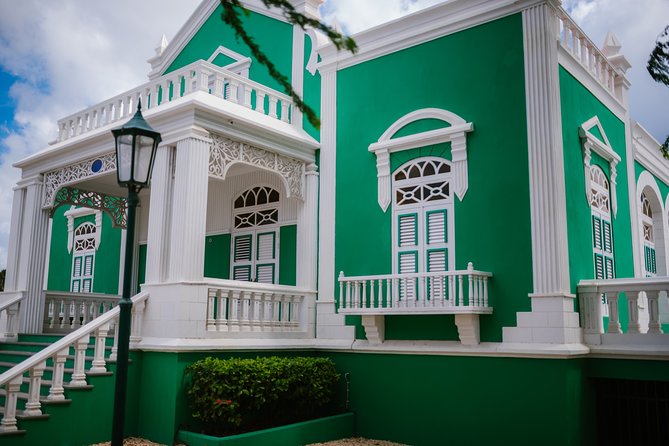
- Fort Zoutman clock-tower view: climb the 1800s tower for downtown perspective
- Iguanas and statues at Wilhelmina Park: a quick stop with a good story
- Aruba’s earliest people at the National Archaeological Museum: pottery, skulls, and tools
- Two included tastings: learn what locals eat, including Pan Bati
- Oranjestad street history: Main Street shops and tram details
- Small-group pace: up to 20 people, easy to ask questions
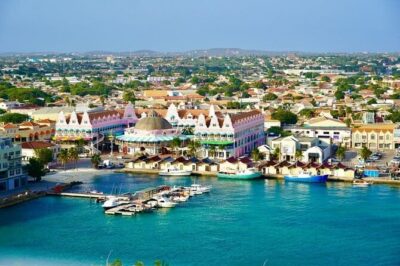
Through the pastel streets of town, more of Aruba
- Half-Day Aruba Island Tour from Oranjestad★ 4.5 · 1,362 reviews
- Aruba Downtown Historic and Cultural Walking Tour★ 5.0 · 623 reviews
- Semi-Private Christmas Edition Twilight Glow E-Bike Oranjestad★ 5.0 · 13 reviews
Oranjestad at 9:00 a.m.: What This Small-Group Walk Is Built For
This tour is timed for the morning start (9:00 am). Aruba can get hot fast, and you’ll do a lot of outdoor walking, so starting early makes practical sense.
You’ll meet at Cosecha Aruban Craft Design & Heritage, Zoutmanstraat 1, Oranjestad. The walk stays focused on downtown Oranjestad, with frequent short stops, so you don’t waste your day bouncing around the island.
Group size stays small (maximum 20). That matters because you can keep up, hear the guide clearly, and ask quick follow-ups without the experience turning into a loud, rushed lecture.
Fort Zoutman Historical Museum and the Old Clock Tower View
The tour kicks off at Fort Zoutman Historical Museum. When it’s open, you’ll go inside and see what’s left of Aruba’s old fort story, including the fort’s origins in the 1700s.
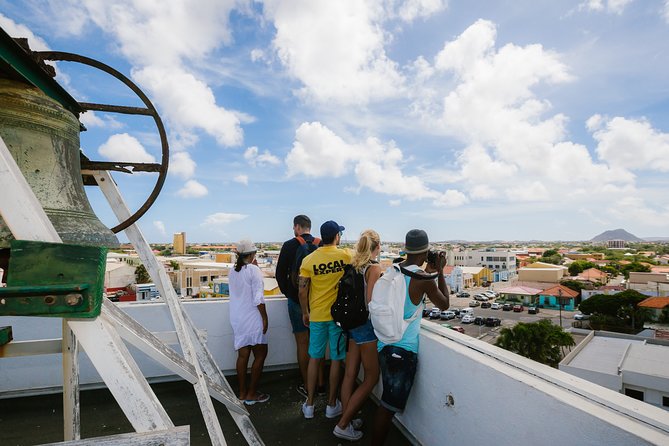
Then there’s the clock tower. The structure dates to the 1800s, and the climb is the kind of stop you’ll remember because it turns history into a real sense of place. From up there, you get a view over downtown Oranjestad and understand how the city grew.
This is also a good “tone setter” stop. It’s early, it’s visual, and it gives context before you move into churches, streets, and politics later on.
Wilhelmina Park: Statues, Iguanas, and a Quick Culture Reset
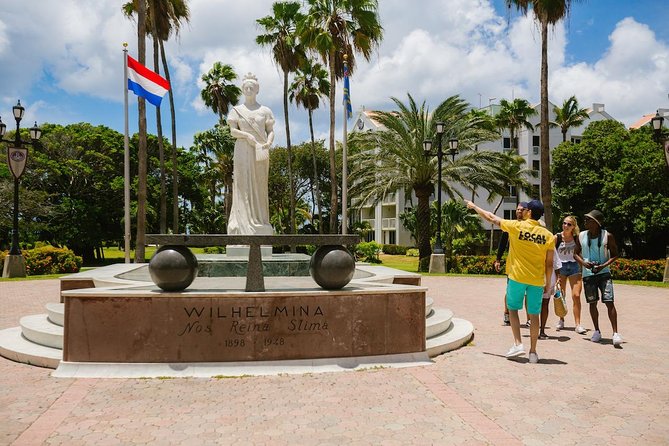
From the fort, the walk moves to Wilhelmina Park for a short, easy stop. The guide points out two impressive statues, and you’ll also see a large number of iguanas.
This is the kind of pause that keeps the tour feeling human. After a museum stop, you get a breather in the middle of the walking rhythm. You also learn what you’re looking at instead of just passing it on the sidewalk.
If you’re traveling with someone who gets restless during long tours, this quick nature-and-statue stop is one of the best ways to keep everyone engaged.
National Archaeological Museum Aruba: Early Inhabitants, Up Close
Next comes the National Archaeological Museum Aruba. When it’s open, you’ll visit inside and learn about Aruba’s first inhabitants.
The museum experience centers on objects: pottery, skulls, and tools used in early days. Even if you don’t read every label, the guide’s explanations help these items connect into a story about daily life, not just artifacts behind glass.
You also get an outside photo backdrop. The museum exterior is described as especially good for pictures, and that’s a nice break from nonstop walking.
More Aruba trips from our own sunburnt field notes

Two Included Tastings: Pan Bati and the Snacks That Make the Stories Stick
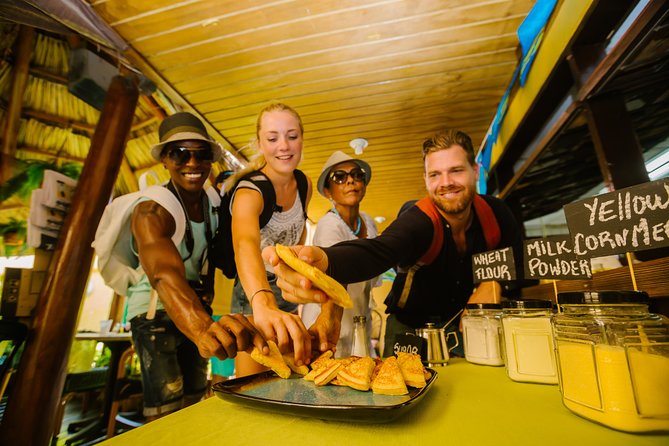
One of the best reasons to book this tour is food is built into it. You get two tastings included, which turns a history walk into something you can taste, not just remember.
The tour specifically calls out Pan Bati, a local snack that’s still popular and widely consumed. That’s a great choice because it’s the kind of thing you can later spot in local menus and bakeries once you know what it is.
You should also be open to a second snack stop beyond Pan Bati. The tour format includes two tastings, and some guides have been known to serve other local favorites along the way, with one example being pastechi.
Practical tip: eat lightly before the tour. The heat can hit harder when your body is tired, and the tour itself encourages a breakfast beforehand.
Oranjestad Main Street and the Shops Since 1928
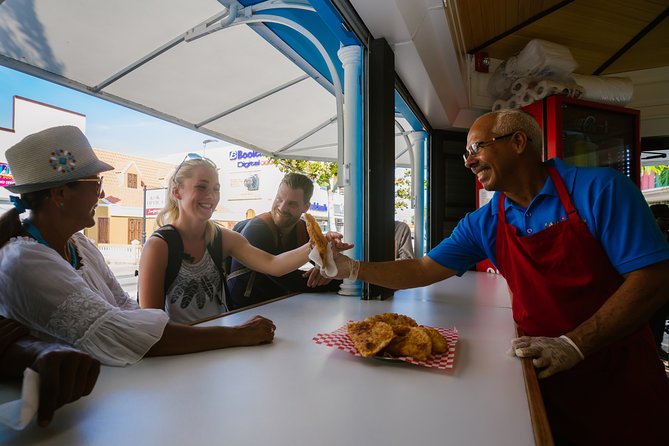
A major chunk of the tour focuses on the feel of downtown Oranjestad—especially Main Street. You’ll walk through the area and learn about stores that have been around since 1928, which is a neat way to understand how commerce and community developed here.
You’ll also hear about the street car/tram that passes through the street. That detail matters because it links history to how people move through town today.
One smart thing about this stop style: your guide doesn’t just point at buildings. They connect streets to transportation, work, and social life. That’s the difference between a photo walk and an actual understanding of place.
Government Buildings, Arts and Crafts, and What Downtown Can Teach
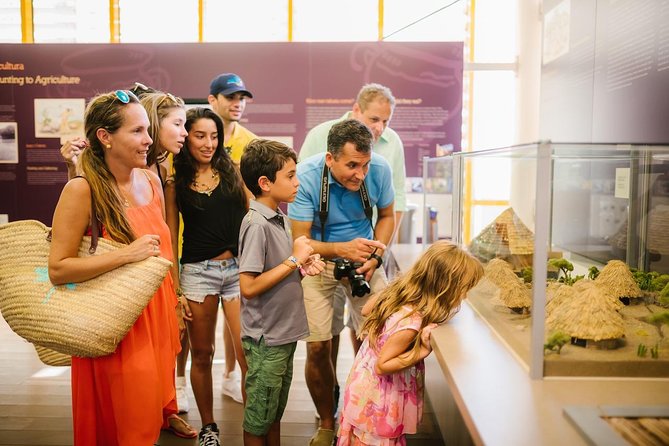
Another downtown stop is in front of one of Aruba’s early government buildings. The guide explains it served multiple purposes in the past, and today it houses local arts and crafts by accredited locals.
This is a useful “both sides” moment. You learn civic history, but you also get a chance to slow down and look at what local makers are producing now. Even if you don’t plan to buy anything, the stop helps you see how the past is still used.
It’s also where you can ask practical questions about what to do next in Oranjestad—because the tour naturally turns into a conversation about where to spend time.
Aruba Parliament: Politics Without the Dry Stuff
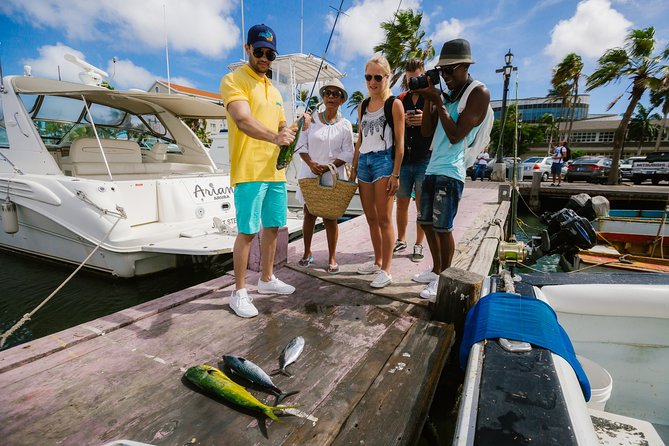
Then you’ll reach Aruba Parliament. The guide explains the island’s political system and points out where local politicians debate on current affairs and laws.
This can be the most “serious” stop on the walk. It’s also one of the most memorable, because you’re seeing the actual place rather than hearing generic facts.
A fair consideration: some guides lean into political context more than others. If you’d rather keep politics out of your sightseeing, you can set that expectation at the start. A good guide will adjust the balance.
Protestant Church and Religion on the Island
Next up is the Protestant Church, built in the 1800s. You’ll learn how Protestant arrived on the island and also hear that it isn’t the largest religion on Aruba.
This is a useful stop even if church architecture isn’t your usual thing. Religion here affects language, community life, holidays, and social organization. The guide’s job is to connect the building to those bigger themes.
The stop is short, so treat it as a doorway. If you want more, you’ll know what to read or ask about later.
Breakfast-and-Party Food at Havenstraat, Plus Homes on Wilhelminastraat
The tour includes a stop at Havenstraat, framed around what Arubans eat for breakfast and at parties. You’ll also get a taste here, which makes this one of the most fun stops because it’s about real-life food culture.
After that, you walk down Wilhelminastraat, a residential street where the guide points out iconic houses. The goal is to show you how locals live, not just how downtown looks.
This is also where the tour starts to feel like a proper orientation. Once you’ve seen neighborhoods and street rhythms, it gets easier to explore on your own later without feeling lost.
How the Tour Adds Up: Lots of Stops, Short Visits, Room for Your Own Time
The tour is listed at about 2 hours 30 minutes, and you can expect a lot of quick “stop and learn” moments. The description indicates approximately 30 stops, so even small ones matter.
Most museum stops are timed to what’s practical. For example, entrances like Fort Zoutman and the archaeological museum are included when open, but you don’t get the kind of long sit-down time you might want if you’re a slow reader.
That’s not a flaw—it’s a choice. This walk is designed to get you oriented and give you a story thread. If you want to linger, plan to come back later and spend time on the specific places that grabbed you most.
Also watch for temperature. The tour operates in all weather conditions, so you’ll want to wear comfortable walking shoes and pace yourself.
Price and Value: Is $45 Worth It in Real Terms?
At $45 per person, you’re paying for a local guide, a small-group experience (max 20), and guided access to key sites.
Two parts make the value feel strong:
- Included entrance fees at museum stops (when open)
That reduces the hassle and keeps the tour moving without you juggling tickets.
- Two included tastings
Food is where tours start to feel less like homework and more like a lived experience. Pan Bati alone is a nice cultural payoff, and the second tasting adds variety.
Add in the fact that you also get insider tips on where to eat, drink, and see downtown, and the price starts to feel reasonable for a first day in Aruba’s capital.
Is it perfect value for everyone? Not necessarily. If you already know the island’s history and want deeper time inside museums, a longer or more specialized option might fit better. But for most people, this is a strong “starter pack” for Oranjestad.
Guide Style Matters: From Wendel to Milton and Evy
One of the most important variables is the guide. The experience depends on storytelling style, pacing, and how much they choose to ask and answer as you walk.
In the guide lineup you might encounter, names like Wendel and Milton show up with repeat praise for energy and interactive moments. Evy and Marisa/Mariza are also mentioned as friendly and fun, with detailed explanations that connect old and new Aruba.
One especially memorable note is that some walks have included interaction with notable people such as an archaeologist and even a high-profile political figure. That doesn’t happen on every tour, but it’s a reminder that downtown Oranjestad is a living place, not a set.
Who Should Book This Walking Tour (and Who Might Skip It)
This is a great fit if you want:
- a morning activity that quickly builds context for the rest of your stay
- a manageable walking experience with frequent short breaks
- history paired with practical food stops and local advice
You might skip or add a Plan B if:
- you prefer long, quiet museum time with plenty of reading
- you don’t want any political context in your sightseeing
- you’re sensitive to heat and want fewer outdoor stops
Also, keep expectations realistic. This is downtown orientation, not a whole-island tour. If your goal is maximum mileage, you’ll want something broader on another day.
Should You Book This Oranjestad Historic Walk?
Yes, I’d book it if this is your first time in Oranjestad and you want a quick, story-driven overview that includes real food.
The tour’s strongest selling points are the combination of Fort Zoutman, the archaeology museum stop, and the two included tastings like Pan Bati. It’s also small enough that you’re not just marching along behind a megaphone.
Just come prepared to walk, and don’t treat it like a slow museum day. Do this, then go back on your own to the places that grabbed you most.
FAQ
How long is the Aruba Downtown Historic and Cultural Walking Tour?
The tour runs about 2 hours 30 minutes.
What is the price?
It costs $45.00 per person.
What does the tour include besides the guide?
You’ll get entrance fees at two museum stops when open, two included tastings, and insider tips on where to eat, drink, and see things in Oranjestad.
Are museum entrance fees included?
Yes, entrance fees at Fort Zoutman Historical Museum and the National Archaeological Museum are included when the sites are open.
What are the tastings?
The tour includes two tastings. One listed local snack is Pan Bati, and the tastings are part of the scheduled snack stops during the walk.
Where does the tour start?
The meeting point is in front of Cosecha Aruban Craft Design & Heritage, Zoutmanstraat 1, Oranjestad, Aruba.
Is pickup available?
Pickup is available from selected accommodations.
Will the tour run in bad weather?
Yes. The tour operates in all weather conditions, so wear comfortable walking shoes.
Is this tour suitable for cruise ship passengers?
Cruise ship passengers with Carnival Cruise Lines, Holland America, Princess Cruises, and P&O Cruises have to book through the ship’s website or on board. Other cruise lines require ship name and docking and re-boarding times at booking.
Can I cancel and get a full refund?
Free cancellation is available up to 24 hours before the experience start time for a full refund. If you cancel within 24 hours, the amount paid won’t be refunded.
More Tours in Aruba





More Tour Reviews in Aruba




More Time in Oranjestad


Not quite your thing? Keep scrolling for more to do around Aruba





Oranjestad City Tours, compared.
 ★ 4.5Half-Day Aruba Island Tour from OranjestadFrom $551,362 reviews
 ★ 5.0Semi-Private Christmas Edition Twilight Glow E-Bike OranjestadFrom $9513 reviews
 ★ 5.0Oranjestad Culture Heritage and Coastal Electric Bike ExperienceFrom $959 reviews
 ★ 3.5Oranjestad AUA Airport Transfer to Oranjestad/Noord/Cura CabaiFrom $187 reviews
Browse the lists this tour appears in